
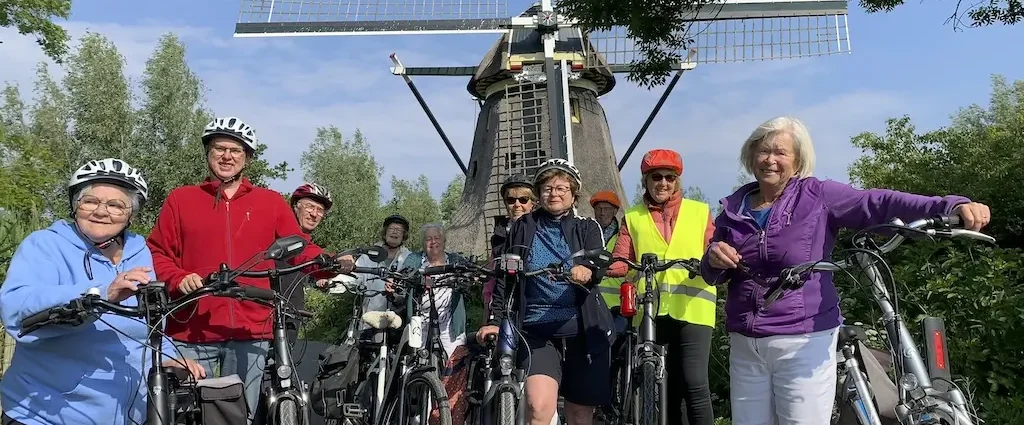
Article on behalf of Doortrappen Amstelveen – Ride Safely Until You’re 100! Author: Edwin Barentsen.
Many cyclists aged 65 and older feel fit and comfortable on their bikes. They are very experienced in traffic and know better than anyone how to anticipate what’s coming. At the same time, traffic has become increasingly heavy and fast, and skills such as balance and reaction time gradually decline over the years without us even noticing.
To ensure safe cycling, there are three key areas where improvements can be made:

The Bike Check
Your bike should be in good condition and adjusted to fit you properly. The tires should be properly inflated so the bike rolls easily. The seat should be at the correct height so that you can stand with both feet firmly on the ground and your knees slightly bent. The brakes should be able to stop the bike within a few meters.
Helmet and mirror
When you're young, it's easy to look back while still keeping your bike moving straight ahead. As you get older, that becomes more difficult, and you tend to sway in the direction you're looking. That's when a mirror on your bike comes in handy—it gives you a clear view of what's behind you and helps prevent swaying.
Wearing a helmet significantly reduces the risk of injury in the event of an accident, as reported by all media outlets. Traffic has become much faster, more congested, and less predictable due to other road users. In short, wearing a helmet is a wise choice, but it is not (yet) mandatory.
Behavior
The traffic environment has changed significantly in recent decades. At the same time, our abilities decline as we age. E-bikes are also heavier and faster than our “old” bikes. This requires us to make adjustments if we want to continue participating safely in traffic.
Riding in a group
Groups require special attention. Keep your distance and give clear signals in situations that call for caution. For example, call out the warning “Pole” and wave with one hand toward the obstacle.
- Post
- For (obstacle in the direction of travel)
- Toward (oncoming traffic)
- Behind (traffic approaching from behind)